The History of Prediction Markets: From Iowa to Blockchain
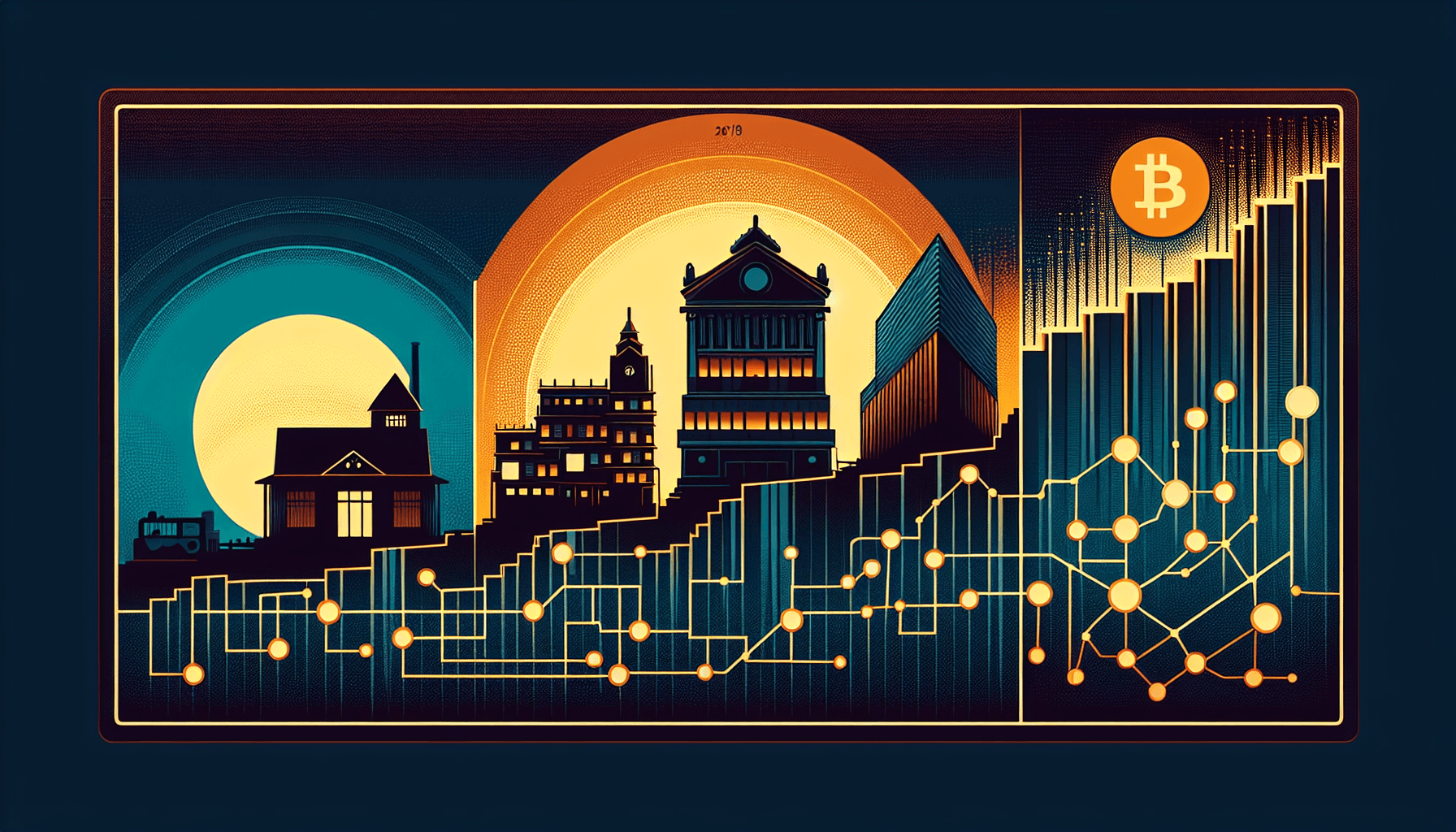
People love to act like prediction markets are some new crypto invention. They're not. Not even close. The idea of trading on real-world outcomes has been around for decades, and honestly, the history is more interesting than most people realize.
Let's go back to the beginning.
Iowa Electronic Markets (1988)
It all started at the University of Iowa. In 1988, a group of professors launched the Iowa Electronic Markets (IEM) as an experiment. They wanted to see if a market where people traded real money on political outcomes could beat the polls.
Turns out, it could. And it wasn't even close.
The IEM nailed presidential election results with scary accuracy, outperforming major polls roughly 74% of the time. The idea was simple. When people have skin in the game, they stop lying to themselves about what they think will happen. Money forces honesty in a way that surveys never can.
The IEM still exists today, capped at $500 per trader. It was never meant to be a business. But it proved something important: crowds with money on the line are remarkably good at predicting the future.
Hollywood Stock Exchange (1996)
Then things got fun. In 1996, the Hollywood Stock Exchange (HSX) launched as a virtual market where you could trade on movie box office performance using fake money. Want to bet that the next Marvel movie would crush opening weekend? Go for it.
HSX was entertainment, sure. But it got surprisingly accurate results. Studios actually started paying attention to HSX prices as a forecasting tool. It proved prediction markets didn't have to be stuffy academic tools. They could be engaging and even a little addictive. Sound familiar?
Intrade: Rise and Fall
If the IEM was the proof of concept, Intrade was the first real attempt at going mainstream. Founded in Dublin in 2001, Intrade let anyone trade real money on politics, current events, and more. It became the go-to platform for election forecasting. Cable news anchors quoted Intrade odds on air. Political junkies refreshed the site obsessively on election nights.
And then it all fell apart.
In 2012, the CFTC (the US commodities regulator) sued Intrade for offering unregistered options to American customers. The site restricted US access. Then in 2013, the company announced it had found financial irregularities in its own accounts. It shut down entirely a few months later.
Intrade's collapse left a hole in the prediction market world. It also taught everyone a painful lesson: centralized platforms carry centralized risk. One bad actor, one regulatory crackdown, and the whole thing disappears.
Augur: Crypto Takes a Swing (2015-2018)
This is where blockchain enters the picture. Augur launched its ICO in 2015 and went live on Ethereum in 2018. The pitch was compelling. Build a prediction market that nobody owns and nobody can shut down. No company to sue. No central account to raid. Just smart contracts and decentralized oracles.
I think the vision was genuinely ahead of its time. But the execution? Rough. Gas fees on Ethereum made small trades impractical. The interface felt like it was designed by engineers who'd never met a normal person. And the oracle system for resolving markets was clunky at best.
Augur proved that decentralized prediction markets were possible. It also proved that being possible and being usable are two very different things.
Polymarket Changes Everything (2020-Present)
Then Polymarket showed up and changed the conversation. Founded in 2020 by Shayne Coplan (who was 22 at the time), Polymarket built something that actually felt good to use. Clean interface. Liquid markets. Real money. Topics people cared about.
The 2024 US election was Polymarket's breakout moment. Billions of dollars in volume. Media coverage everywhere. The platform's odds became a reference point for journalists, traders, and politicians alike. It wasn't just a crypto niche thing anymore.
But Polymarket still runs into the same tension that's haunted prediction markets forever: regulation. US users can't officially participate, and the platform operates in a gray area that could shift any day.
Where Yogen Fits In
So here we are in 2026, and prediction markets have come a long way from a university experiment in Iowa. We've watched centralized platforms get shut down. We've watched decentralized ones struggle with usability. We've watched Polymarket prove there's massive demand.
That's why we're building Yogen on the Canton Network. Canton gives us something previous platforms didn't have. Real privacy controls, composability with institutional finance, and a blockchain actually designed for regulated markets. We don't have to choose between decentralization and compliance.
Every generation learned from the failures before it. Iowa proved the concept. HSX made it fun. Intrade showed centralization risk. Augur showed the limits of pure decentralization. Polymarket proved the demand.
We're building on all of those lessons. And honestly, I think the best chapter is still being written.